

The CPU roadmap from Intel shows exciting developments for the coming years. With new architectures and processors expected to hit the market by 2025, a lot is set to change. In this article, we take a look at the future of Intel CPUs, technological advancements, market analyses, and the challenges Intel must overcome to remain competitive.
Key Insights
- Meteor Lake is just the beginning; Lunar Lake and Panther Lake will follow soon.
- The 18A process node could significantly enhance the efficiency and performance of the new CPUs.
- Intel must face competition from ARM to stay relevant in the PC market.
- Clearwater Forest will be the next generation of server CPUs and could revolutionize data centers.
- Artificial intelligence will play a central role in the new processors.
The Future of Intel CPUs
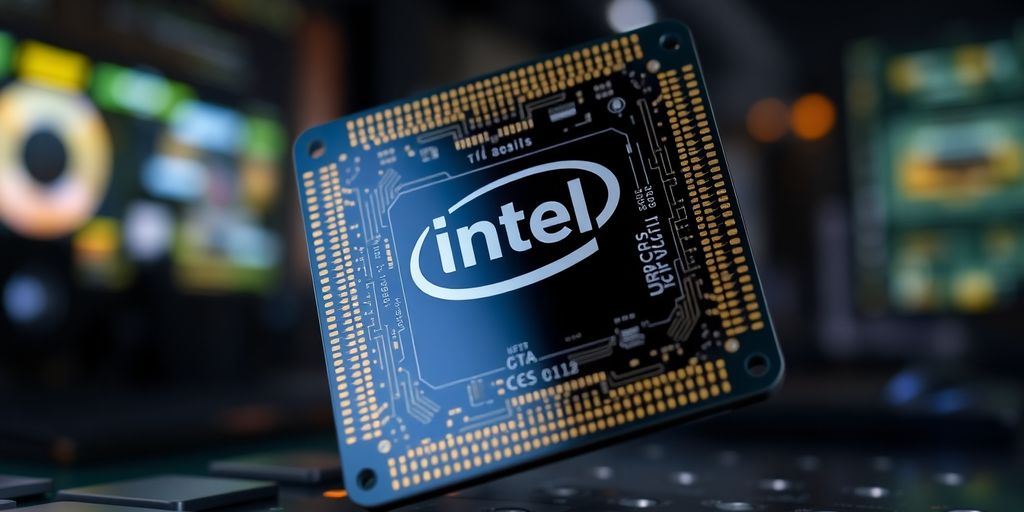
What Comes After Meteor Lake?
Okay, Meteor Lake had its launch difficulties, but what comes next? Intel has high hopes for Lunar Lake. It is expected that Lunar Lake will not only improve performance but also be significantly more energy-efficient. This is especially important for laptops and other mobile devices. Intel aims to make a comeback in the consumer market with new CPUs.
The Role of Lunar Lake
Lunar Lake is set to be a real game changer. It’s not just about more performance, but also about new features, especially in the area of AI. Intel wants your next CPU to not only compute faster but also be smarter. Think of better image processing, faster video editing, and generally smoother operations.
- Improved energy efficiency
- New AI features
- Optimization for mobile devices
Lunar Lake is Intel’s response to the growing competition from ARM-based processors. It will be exciting to see if Intel can really make an impact with it.
Expectations for Panther Lake
And what comes after Lunar Lake? Panther Lake! Expectations are naturally even higher here. Panther Lake is expected to be based on an even more advanced process node and offer even more performance. Rumor has it that Panther Lake will focus even more on AI features.
Panther Lake is expected to be the spearhead of Intel’s innovations.
| Feature | Expectation |
|---|---|
| Process Node | Even more advanced than Lunar Lake |
| Performance | Significantly higher than Lunar Lake |
| AI Integration | Even stronger integration of AI features |
| Energy Efficiency | Further optimized |
Technological Advancements
Sure, let’s take a look at what’s happening in technology! It’s really exciting to see all the developments.
18A Process Node
The 18A process node is truly a game changer. Imagine, Intel wants to regain credibility in manufacturing with it. This is set to launch in the second half of 2025. This is really important because Intel wants to be back in the game. If it works out, they could catch up with Samsung and TSMC. That would be something, right?
New Architectures
There’s also a lot happening with architectures. Intel is constantly working on new designs to improve performance and reduce power consumption. The Arrow Lake architecture is expected to bring significant improvements. Enhanced CPU architectures and advanced manufacturing techniques that significantly increase both performance and efficiency are in the works. I’m really curious to see what they have come up with.
Manufacturing Innovations
Innovations in manufacturing are super important. It’s not just about smaller structures but also about new materials and techniques. ASML plays a huge role here because they build the machines for EUV lithography. Without them, nothing works in the production of 5- and 3-nanometer chips. Crazy, right?
Manufacturing is truly a key area. Intel wants to regain production leadership with IDM 2.0. They are building facilities in the USA and Europe and acquiring new EUV systems. This is a massive effort, but if it works, they will be back at the forefront.
And here are a few points that I think are important:
- New materials for transistors
- Improved cooling techniques
- 3D chip design
Market Analysis and Trends
Competition with ARM
Okay, let’s talk about ARM. They are really making waves, aren’t they? It used to be all about Intel and AMD, but now ARM is making a significant impact. They are particularly strong in the mobile sector, but now they want to enter the PC market and data centers as well. This means for you as a consumer: more choices, but also more confusion, as you have to decide which architecture best suits your needs. For Intel, this means they really have to step up to keep up.
Changes in the PC Market
The PC market is constantly changing. It used to be simple: desktop or laptop. But now there are 2-in-1 devices, mini-PCs, gaming laptops, and so on. And then there’s the trend towards more mobility. People want to be able to take their work anywhere. This means that energy efficiency is becoming increasingly important. Intel needs to develop CPUs that are not only fast but also allow for long battery life. And then there’s the influence of tablets and smartphones. Many people use these devices for everyday tasks that they used to do on a PC.
Customer Needs in Focus
At the end of the day, it’s all about what you as a customer want. Do you need a high-end gaming PC, or is a budget laptop sufficient for university? Do you want a device that is super lightweight and mobile, or is performance more important to you? Intel needs to understand these needs and develop CPUs that meet them. And that’s not so easy because customer needs can vary widely. But if Intel can achieve this, they have a good chance of being successful in the future.
It’s really exciting to see how the market is evolving. It used to be so clear, but now there are so many different options. And that’s good for you as a consumer because you have more choices, and manufacturers have to work harder to get your attention.
Server CPUs and Data Centers
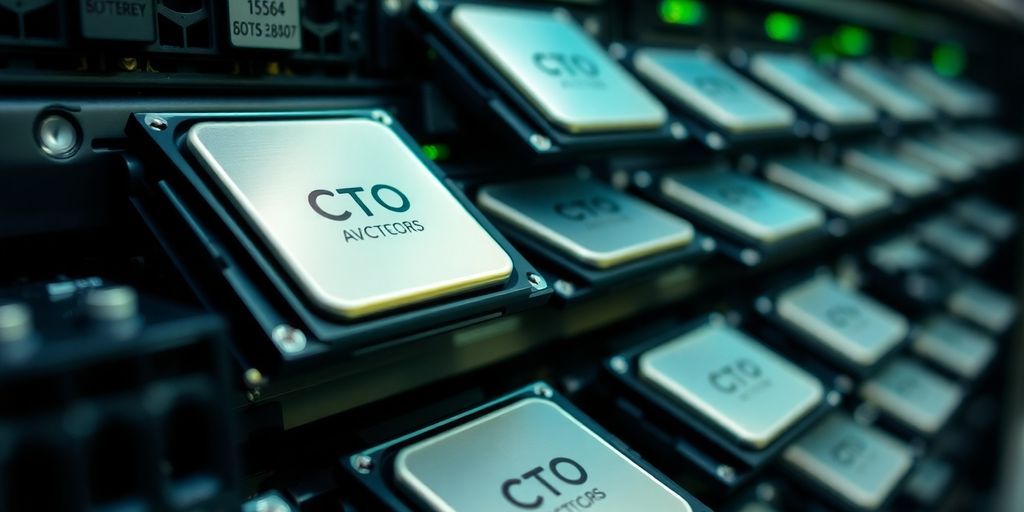
Sure, let’s talk about server CPUs and data centers. This is a really exciting field where things are constantly changing. It’s not just about raw computing power, but also about efficiency, scalability, and of course, costs.
Clearwater Forest in Detail
Clearwater Forest is basically Intel’s response to the increasing demand for more cores in servers. Imagine having a bunch of small, efficient E-cores working together to handle massive workloads. The thing is, these E-cores are not just any cores. They are specifically optimized to handle data center tasks SP7 for AMD. This means less power consumption while maintaining the same or even better performance compared to traditional P-cores for certain applications.
Xeon E-Core Developments
The development of Xeons with E-cores is really interesting. It’s about finding a balance. You need enough power for demanding tasks, but at the same time, power consumption should remain manageable. This is especially important in data centers, where every watt counts. The new generations of Xeons are increasingly relying on this E-core architecture to achieve just that. This also means that as a data center operator, you will spend less on cooling and power. Win-win, right?
Future Visions for Data Centers
What does the future look like? I think we will see more specialization. CPUs will no longer just be ‘CPUs’ but tailored solutions for specific tasks. AI, big data, cloud computing – all of this is driving development forward. And of course, the competition. AMD is putting significant pressure on Intel, and that’s good for all of us. Innovations will be pushed forward more quickly, and in the end, we benefit from better hardware. Also, think about new cooling technologies, like liquid cooling, which will play a larger role in the future to manage the heat generated by increasingly powerful CPUs.
The future of data centers will be characterized by a mix of specialized hardware, efficient cooling, and intelligent resource management. It’s about getting the most out of each chip while also reducing operating costs.
And here are a few points that will be important in the future:
- More focus on energy efficiency
- Stronger integration of AI accelerators
- Even more automation in operations
Artificial Intelligence and CPUs
Artificial intelligence is no longer just a thing of the future; it’s a fixed part of modern CPUs. What does this mean for you? More power, smarter applications, and a whole new way to use your computer. Let’s take a look at what’s going on.
AI Features in New Models
The latest CPU models are packed with AI features. This is not just marketing talk; it really brings you benefits. Think of image processing, video editing, or simply optimizing your daily tasks. The CPUs essentially learn with you and adapt to your needs.
- Faster image recognition
- Improved speech processing
- More efficient algorithms for machine learning
The Importance of NPU
What is an NPU anyway? It stands for Neural Processing Unit, which is a special unit in the CPU optimized for AI tasks. Imagine it as a turbo for your AI applications. Intel’s Lunar Lake CPUs offer an improved NPU that delivers three times more TOPs (Tera Operations Per Second) than the previous generation. This means: AI tasks are not only completed faster but also more energy-efficient.
NPUs are the key to the future of AI on end devices. They enable complex AI models to run directly on your laptop or PC without relying on cloud services. This not only brings more privacy but also significantly lower latency.
The Future of AI CPUs
What’s next? The development of AI CPUs is far from over. We can look forward to even more powerful NPUs, new architectures, and innovative manufacturing technologies. AI is becoming more and more standard, and your CPU will become the intelligent center of your digital life.
| Generation | Planned Features |
|---|---|
| Arrow Lake | Expansion of AI features to desktop platforms |
| Panther Lake | First client CPU on the 18A process |
Consumer Market and Sales Figures
Successful Sales Figures
So, how are the new CPUs doing? Really well, I must say! The sales figures are quite solid, especially for models that offer good value for money. People are checking exactly what they get for their money. And if it fits, they will buy it. The latest Intel processors seem to have convinced some. What stands out is that the demand for CPUs for gaming PCs remains high. It seems many of you are still keen on gaming!
Strategies for 2024
Okay, what do CPU manufacturers have planned for this year? Mainly, it’s about developing even more efficient and powerful chips. Energy efficiency is a big topic because no one wants their PC to heat up the whole apartment while gaming. Additionally, manufacturers are trying to optimize their production processes to produce more chips and keep prices stable. And of course, new features are also being worked on to make work and play even smoother.
Goals for AI PCs
AI PCs are currently very trendy. But what exactly do manufacturers want to achieve with them? Here are a few goals:
- Faster AI applications: The new CPUs should significantly accelerate AI tasks like image processing or speech recognition.
- Better integration of AI: AI should be more seamlessly integrated into everyday life, for example, through intelligent assistants that help with work.
- More privacy: Some AI functions should run directly on the PC without needing to send data to the cloud. This is obviously better for data protection.
Manufacturers want AI PCs to be not only faster but also smarter and more secure. It’s about ensuring that AI truly provides added value and is not just a marketing gimmick.
And regarding sales figures: Manufacturers hope that AI PCs will be a real hit and that market shares for CPUs will rise significantly. But whether that really works out depends on whether the new features truly convince.
Challenges and Solutions
Production Issues with Meteor Lake
Okay, Meteor Lake was quite a thing, wasn’t it? There were really issues with production. High expectations, but then came the difficulties. The result? Delays and less availability.
- Complexity of design:
- Integration of various tiles:
- Coordination of manufacturing processes:
That was really a tough nut to crack, but hopefully, Intel has learned from it. Now they need to show that they can do better. The strategic realignment is an important step.
Response to Market Changes
The market is constantly changing, that’s clear. ARM has become a real competitor, and customers want more performance for less money. Intel really has to work hard to keep up. The IDM 2.0 strategy is a key point here.
Intel must remain flexible and respond quickly to new trends. This means they not only need to improve their products but also rethink their entire strategy.
Strategies for Improvement
So what can Intel do to get back to the forefront? Here are a few ideas:
- Focus on innovation: New architectures and manufacturing processes are crucial. The 18A manufacturing process is an important step.
- Increase efficiency: Less power consumption with the same or better performance is the goal.
- Seek collaboration: Partnerships can help reduce costs and accelerate innovation.
And very importantly: Keep an eye on customer needs! What do people really want? Only then can Intel be successful.
Conclusion on the CPU Roadmap
So, when we look at the CPU roadmap, it becomes clear: The next few years will be exciting. Intel has big plans, and it seems they are ready to shake up the market. With new technologies and processors on the horizon, the landscape of computer technology could change significantly by 2025 and beyond. Of course, there are challenges, especially from the competition, but this could also provide a positive boost for innovations. So we should be curious about what the future holds – maybe our next PC will be a real game changer!
Frequently Asked Questions
What are the latest developments in Intel CPUs?
Intel has announced new CPU models like Meteor Lake and Lunar Lake that are set to hit the market in the coming years.
When will Panther Lake be released?
Panther Lake is expected to be released in 2025 and will be Intel’s first CPU on the 18A process.
How is the energy efficiency of the new CPUs improving?
The new CPUs, especially Lunar Lake, promise better performance with lower power consumption, significantly increasing energy efficiency.
What is the role of artificial intelligence in the new processors?
Artificial intelligence plays a significant role in the new models, as they offer special functions for AI applications.
How does the competition with ARM processors look?
Intel sees ARM processors as serious competition, especially in the PC market, and plans to counter with new technologies and products.
What challenges does Intel face in 2024?
Intel faces challenges such as production issues and the need to adapt to changing market conditions.


